Richard Dean Straw, N6BV, ARRL “Antenna Expert,” Silent Key
by Mark Derks, KC1RVQ, ARRL Headquarters Staff
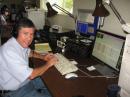
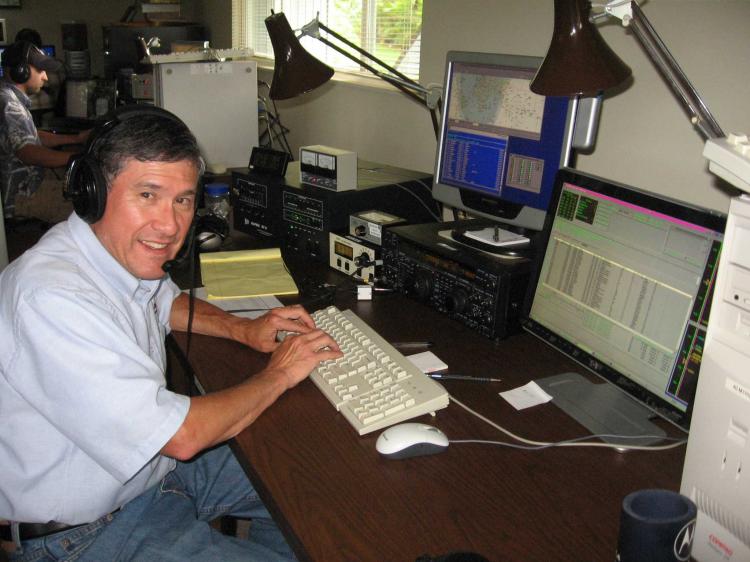
Richard Dean Straw (“Dean”), N6BV, died on July 9, 2025. Amateur radio was one of his passions.
Dean retired from the staff of ARRL The National Association for Amateur Radio® in 2008 following 15 years of service as the Senior Assistant Technical Editor.
***
In 2006, the World Radiosport Team Championship (WRTC) was held in Florianópolis, Brazil, a coastal city that straddles both Santa Catarina Island and the Brazilian mainland. Not far inland, snow-capped mountains climb into the clouds, and miles of glittering, sandy beaches ring the city. The climate is subtropical and supports a dizzying diversity of plant and animal life from swaying palms to visiting American tourists. Among those visiting tourists, in this case for the WRTC as part of the PT5J team, was Dean Straw, N6BV. Accompanying him was his beloved wife, Rayma.
Dean was born on another island, thousands of miles from Florianópolis, in Honolulu, Hawaii, in 1946. He lived there until he came to the mainland to study electrical engineering at Yale University. After graduating, he worked in radio design in Massachusetts at the National Radio Company, as well as in North Carolina, San Francisco, and on Cape Cod. “He had a great ability to pull calls out of the noise,” his counterpart in PT5J in WRTC, Mark Obermann, AG9A, recalled. “Must have had some extra processing gain inside his noggin.” While Dean and Mark wouldn’t win the contest that year, they posted an impressive score of 1,333,789. After the contest, while vacationing in Brazil, Obermann relayed an anecdote that involved another of Straw’s hobbies, competitive running. Dean and Rayma were in Rio de Janeiro, when “a kid stole Dean’s 35mm camera.” Being a long-distance runner, Dean chased after him for several miles before it occurred to him that catching the kid might be dangerous, and that possibly “getting killed was not worth getting the camera back.” Indeed, Dean would live many years beyond that trip to Brazil, passing away from complications of an extended battle with Parkinson’s disease. Rayma Mui, his wife of 38 years, survives him, as do sons Geoff and Rick.
Not only is Dean remembered among hams for his contesting prowess, but for his tenure in the Publications Department at ARRL Headquarters. He edited five editions of The ARRL Antenna Book (the most of any named editor), four volumes of The ARRL Antenna Compendium (4 – 7), and several editions of The ARRL Handbook. Former QST Editor and ARRL author Steve Ford, WB8IMY, recalled his time with Dean. He “became my ‘antenna mentor’ when I joined the Headquarters staff. Until I met Dean, I didn’t even know that ladder line existed” or about its “low-loss characteristics. He helped me incorporate it into my home station and then collaborated with me in writing a popular QST article about my experience.” The article was titled “The Lure of the Ladder Line” and appeared in the December 1993 issue.
Reflecting on Straw’s contributions to The ARRL Antenna Book, that volume’s most recent editor, H. Ward Silver, NØAX, says, Dean’s “were very big shoes to fill. Dean started with a small book of antenna fundamentals and basic designs, then brought it into the modern era with much more detail and a wider scope that was groundbreaking.”
Beyond his expansion and updating of The ARRL Antenna Book, Straw wrote modeling software that is still distributed with The Antenna Book, including Yagi for Windows, for which he “generated a whole family of HF and VHF designs,” according to Silver. He also wrote Transmission Lines for Windows (TLW), which “integrated several calculator-style tools into one comprehensive package.” And, arguably, his software masterpiece was High Frequency Terrain Analysis (HFTA), which “combined terrain data and antenna patterns so that hams could finally get a reasonably good idea of where their signal energy was actually going. His painstakingly prepared set of Angle of Arrival files that modeled propagation to and from many areas allowed top stations to optimize their antenna systems to a high degree. Combined with the wide availability of software tools like EZNEC, the effect on amateur radio antenna system design was Promethean,” again, according to Ward Silver.
Chris Tate, N6WM, the station coordinator for Radio Oakley N6RO – the contest station of Ken Keeler, N6RO – remembered Dean as “an instrumental antenna design engineer.” At the station, Straw contributed “massively to the antenna farm with many unique and effective designs that gives N6RO its signature ‘punch’ from W6. Dean was also an expert operator, particularly in SSB, whose recordings of his ARRL Sweepstakes operating trained and guided Northern California Contest Club members for years.”
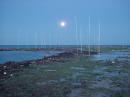
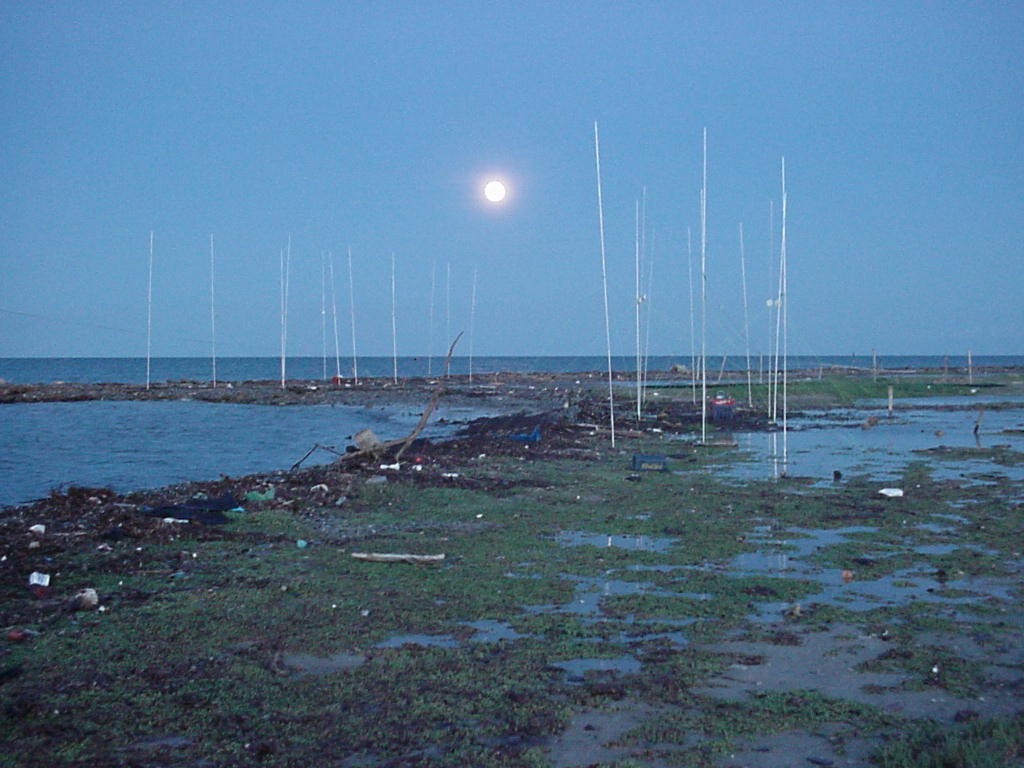
Friend and fellow contester, Dave Patton, KW9A, who also worked at ARRL Headquarters with Dean, remembers him as “one of the smartest, kindest and most innovative hams I have known.” On another notable DXpedition, 4M7X on Coche Island in Venezuela, Dean’s switchable 10-element arrays for the high bands worked so well that his team “broke the world record despite the large antenna farm being slowly destroyed over the weekend by the remnants of a large hurricane passing by.” According to Patton, the DXpedition consisted of “43 antennas and 7 complete, 1500-watt stations.”
ARRL FCC Counsel David Siddall, K3ZJ, shared this remembrance, “his contributions to ham radio and to ARRL will continue through his unmatched propagation and related terrain studies, software packages (including HFTA), articles, and other contributions to ARRL publications – many of which continue to be widely distributed, consulted, and used almost two decades after he retired from the ARRL.”
Dean Straw’s, N6BV, legacy lives on through his many contributions to ham radio at ARRL Headquarters and beyond, and in the countless lives he touched with his generosity, intelligence, and love. Dean shared this message when he retired from the ARRL staff: "The Lord has been good to me -- how many people can truly say that their vocation has been their beloved avocation too? My wife has consistently maintained over the years: 'You're having entirely too much fun in this job!'"
Dean’s son Geoff Straw shared this tribute prepared by his family:
Richard Dean Straw (“Dean”) was born and raised in Honolulu, Hawai’i to Richard Herbert and Mae Fuyuko Straw (nee, Sukehira) on March 1, 1946. Dean graduated a year early from the ‘Iolani School in 1963 to attend Yale University, majoring in Electrical Engineering. Dean met and married Terrianne Kreiger while studying in New Haven, where their two sons Richard John Straw and Geoffrey Dean Straw were born. After graduating in 1967, Dean took on increasingly more important professional roles in the marine electronics and communications industries, which resulted in the family’s many moves in Massachusetts, North Carolina and eventually California. Dean met his forever wife Rayma Mui in San Francisco, where they lived for almost four decades. They traveled the world together before Dean was diagnosed with Parkinson’s Disease shortly after he retired in 2010. Dean fought the disease valiantly, with Rayma always at his side. They continually looked to their Lord for guidance and peace. Dean passed away in July 2025, leaving behind his loving wife Rayma in San Francisco, and his two sons Geoff (Nancy) in San Luis Obispo, California and Rick (Christi) in Ft. Collins, Colorado. He is also survived by five grandkids (David, Kelsey, Katelyn, Erin, and Cassidy), four great-grandkids (Danika, Dominic, Ramona and Ophelia), and many nieces and nephews. He was preceded in death by his parents and his younger brother William Kirk Straw (“Kirk”).
Dean Straw SK
by Dave Leeson, W6NL
Another giant of ham radio is now a silent key. As reported to us by his wife Rayma, Dean Straw N6BV passed away July 9, 2025 due to complications of Parkinson's disease. He was a Contest Hall of Fame winner, famous contester, author/editor of the ARRL Antenna Book, author of HFTA, TLW and other important software tools, engineer, mentor, and a key designer-builder of the N6RO contest station.[1]
Dean Straw, N6BV, was first licensed as WH6DKD in 1959. He studied to be an electronic engineer at Yale, then joined National Radio and designed SSB and VHF radios.[2] His career eventually led to his work at the ARRL, from which we all benefit greatly.
Dean was active in contesting, living in New England and then with the N6RO superstation in California: “I’ll admit it — my first love in Amateur Radio is HF contesting.”[3]
Dean was of course familiar with the chapter on antenna siting in my 1992 book, and when he was looking for another New England job around the same year, he contacted me, knowing that my company California Microwave, Inc., had just acquired Microwave Radio Corporation (Fred Collins, W1FC, president) in Massachusetts.[4]
That didn’t work out, but he followed the recommendations of many of us who were familiar with his ham radio interests to approach the ARRL. That clicked, and he was there for a decade and a half, writing articles, giving talks and editing the famous ARRL Antenna Handbook.
While at ARRL, Straw specialized in antennas, transmission lines and propagation. "I have been able to utilize my training as an electronics engineer in other areas where I could help out. I've enjoyed being associated with some remarkable people at ARRL -- folks who are truly dedicated not only to preserving the legacy of Amateur Radio, but to taking Amateur Radio forward in the 21st century."
In his 15 year tenure at ARRL, Straw served as Senior Assistant Technical Editor in the Publications Group. He was Editor of The ARRL Antenna Book for five Editions (17th-21st Editions), Editor of The ARRL Antenna Compendium series (Volumes 4-7), as well as several editions of The ARRL Handbook. He was co-author of Simple and Fun Antennas for Hams with Chuck Hutchinson, K8CH.
A frequent contributor to QST (he most recently served as the handling editor for "Hints & Kinks" column) and NCJ - The National Contest Journal, Straw has been Editor of numerous ARRL books: ON4UN's Low-Band DXing (4th Edition), Low-Profile Amateur Radio, The ARRL DXCC Handbook, DXing on the Edge, Amateur Radio on the Move, Antenna Zoning for the Radio Amateur and the ARRL Continuing Education Antenna Modeling course.
Straw said, "The Lord has been good to me -- how many people can truly say that their vocation has been their beloved avocation too? My wife has consistently maintained over the years: 'You're having entirely too much fun in this job!’”[5]
His software, including HFTA, is widely used and appreciated by those of us who maintain an interest in HF propagation, especially as it pertains to contesting. Some history on this subject is found in papers and talks by such experts as Breakall, WA3FET, Beezely, K6STI, and Lewallen, W7EL.[6]
After he retired in 2008, he moved to California, but continued his energetic devotion to the study of HF propagation and the impact of terrain. He was active in presenting at the Dayton Hamvention Antenna Forum, as well as other conventions, the Contest University and even at local ham radio meetings (including one at the Stanford Amateur Radio Club).[7] He continued to develop the sophistication of his modeling software and its interpretation, and was an active contributor to the design, construction and operation of the N6RO superstation.
Dean was widely respected as a technical wizard, but also as a great friend who offered his help and advice to anyone who needed it, competitors included. He’ll be greatly missed by those of us who knew him well and worked closely with him in his favorite radio interests.
References
[1] Dean Straw, N6BV – SK, https://forums.qrz.com/index.php?threads/dean-straw-n6bv-sk.977147/
[2] R. D. Straw, “Don’t Blow Up Your Balun,” QST, June 2015, see pg. 36.
[3] R. D. Straw, “The Effect of Local Terrain on HF Launch Angles,” QEX, July 1995, pp. 3-15
[4] “California Microwave, Sunnyvale, California, has entered into an agreement to acquire 100% of Microwave Radio Corporation’s stock,” Broadcast Engineering, June 1992, pg. 126.
[5] ARRL "Antenna Expert" to Retire, https://www.arrl.org/news/arrl-quot-antenna-expert-quot-to-retire
[6] See for example, J. Breakall WA3FET, “Maximizing Performance of HF Antennas with Irregular Terrain,” https://www.contestuniversity.com/wp-content/uploads/2021/01/Contest-University-HF-Propagation-in-Irregular-Terrain.pdf; D. Leeson, “Antenna Topics,” https://www.kkn.net/dayton2007/w6nl_ant.pdf
[7] See for example https://www.kkn.net/dayton2004/dayton-2004-antenna-forum.html, https://www.seapac.org/seminars/2014/sea-pac2014-n6bv-Terrain%20Assessment.pdf, https://www.contestuniversity.com/wp-content/uploads/2021/01/Contest-University-HF-Propagation-in-Irregular-Terrain.pdf. More talks by Straw are listed at https://www.k3lr.com/Dayton/ See also, R. D. Straw and G. L. Hall, “Antenna Height and Communications Effectiveness, A Guide for City Planners and Amateur Radio Operators,” ARRL, 1998.
Memorial to Dean Straw, N6BV
from Prof. Jim Breakall WA3FET
January 6, 2026
I am very sorry to hear about my friend and colleague Dean Straw, N6BV, becoming a Silent Key. What I remember most about Dean is when I had a Navy project in the early 1990s to measure dipole and vertical antennas in front of a hill, on top of a hill, and behind a hill at HF in Utah. We used a helicopter that towed either a 3-axis receiver (RELEDOP) or a transmitter (XELODOP) that was developed by SRI International in Menlo Park, CA. This system was used for measuring and verifying antenna performance mainly for the military. It flew at an altitude of 10,000 feet and could get the elevation pattern by flying from almost horizon to horizon to get down to really low take-off angles. While these measurements were being performed, I also came up with a way to model the terrain with what is known as the Geometrical/Uniform Theory of Diffraction (GTD/UTD) [1] that used plates with lossy ground characteristics and computed all the ray reflections (Geometrical Optics – GO) and diffraction (GTD/UTD) from edges of the plates. This technique was normally used at much higher frequencies and never applied before at HF. After getting really good agreement between the measurements and modeling as reported in an IEEE Antennas and Propagation Society paper [2], I told Brian Beezley K6STI and Dean Straw N6BV about the great results. Brian wrote a code named Terrain Analyzer (TA) [3] that worked in DOS and Dean wrote the code HFTA [4] that worked in Windows. Brian’s code was more interactive and worked with horizontal and vertical polarization, and Dean’s code worked in Windows with many built in horizontal antennas including stacking and also had statistics of propagation that he also produced from VOACAP [5]. Dean’s HFTA code became very popular and was included with the ARRL Antenna Book [6]. More recently, Stu Phillips K6TU [7] provides a service of producing the terrain files for any location that can be used directly into HFTA. Since Dean was the editor of the ARRL Antenna Book, he had an extensive section on terrain analysis and how to use HFTA. The other incredible project that Dean worked on was the creation of a huge database of propagation statistics using VOACAP for various paths in the world for all sunspots, seasonal variation, time of day, etc. It is also included in the ARRL Antenna Book. This was just a voluminous amount of work that Dean did putting these results into something that was understandable to any Amateur interested in propagation. Dean was also an avid antenna designer and modeling expert and designed many excellent Yagi designs in the Antenna Book. He was the editor of the ARRL Antenna Book for many years and completely modernized the previous versions with more accuracy and technical understanding with antenna modeling. Dean also was quite a competitive contester and was inducted into the CQ Contest Hall of Fame. He was much competition to my K3CR contest station in the day. One of the programs he also made was TLW [8] that I still use a lot that can model transmission lines, loss, and tuner design. He will be missed very much and my sincere condolences to his family and friends. All of his work will live on by many who have used it in the past and still use it presently. He was one of a kind for sure, and I am so honored to have known him as a friend, collaborator, and colleague. RIP Dean N6BV SK.
If one wants to read more about some of the history and some of the kind of results that can be produced from Dean’s HFTA, please look at the following link:
References
[1] Keller J., “Geometrical Theory of Diffraction,”Journal of Optical Society of America 1962
[2] Breakall J. et. al., “The Modeling and Measurement of HF Antenna Skywave Radiation Patterns in Irregular Terrain,” IEEE Transactions on Antennas and Propagation, VOL. 42. NO. 7, JULY 1994.
[3] Beezley B., Terrain Analyzer (TA), Copyright 1998.
[4] Straw D., High Frequency Terrain Assessment (HFTA) Program, ARRL Antenna Book.
[5] VOACAP, www.voacap.com.
[6] ARRL Antenna Book, 25th Edition, First Printing (2023), ISBN: 878-1-62595-183-0.
[7] K6TU Propagation Services, https://www.k6tu.net/
[8] TLW (Transmission Line for Windows), in ARRL Antenna Book software.
Photo Gallery
-
 Richard Dean Stra...
-
 Some of the anten...
-
 Reinaldo, YV5AM (...
Back


