ARRL Audio News
| · | To subscribe, unsubscribe, or change your e-mail delivery address: see How to Get The ARRL Letter, below |
| · | Delivery problems (ARRL member direct delivery only!): letter-dlvy@arrl.org |
| · | Editorial questions or comments: Rick Lindquist, N1RL, rlindquist@arrl.org |
| · | ARRL Audio News: http://www.arrl.org/arrlletter/audio/ or call 860-594-0384 |
| · | The ARRLWeb Extra: http://www.arrl.org/members-only/extra |
NOTE: Because the Dayton Hamvention begins Friday, May 14, next week's editions of The ARRL Letter and ARRL Audio News will be posted Wednesday, May 12. The solar/propagation bulletin will be transmitted Friday by W1AW and also will be available on the ARRL Web page and in The ARRLWeb Extra. See you in Dayton!--Rick Lindquist, N1RL
IN THIS EDITION:
- +Hams respond as tornadoes devastate Oklahoma, Kansas
- +Tennessee twisters!
- +FCC recalls K7IJ figure for retesting
- +Don Stoner, W6TNS, SK
- +RAC president, secretary resign
- Letterman show "a bust" for NY club
- N1GNV is new ARRL advertising manager
- Solar update
- In Brief: This weekend on the radio; Vanity update; Amateur Radio-carrying rocket launch set; QRN vs QRNN? April QST Cover Plaque Award; Texas club celebrates 75 years; SATERN station seeks equipment; New VHF category added
+Available on ARRL Audio News
OKLAHOMA, KANSAS TORNADOES: HAM RADIO IS THERE--BEFORE, DURING, AND AFTER
Hams in Oklahoma and Kansas were ready and waiting in the hours before severe tornadoes devastated entire communities south of Oklahoma City and in the Wichita, Kansas, area. The storm system developed in southwestern Oklahoma and moved to the northeast, spawning numerous tornadoes. The storms have left at least 46 people dead, hundreds injured, and thousands homeless.
Peter Laws, N5UWY, at the National Severe Storms Lab in Norman, Oklahoma, reports that the National Weather Service office there was in contact--mostly via 2 meters--with various weather-spotting nets to the south and west of the Oklahoma City metropolitan area. "SKYWARN is a regular, everyday occurrence here, and hams are a vital part of the warning process," Laws said.
The storms wiped out thousands of houses. Meteorologists said the worst tornadoes appeared to be F5 storms packing winds of 260 mph.
Oklahoma Public Information Coordinator Thomas Webb, WA9AFM, reports he's monitored health-and-welfare traffic on both 2 meters and 75 meters coordinating Salvation Army canteen support. "Based on the excellent warning, most of the victims appear to have left the disaster area prior to the strike and were in contact with friends or family or were in shelters with adequate communications," he said. Oklahoma Section Emergency Coordinator Bennett Basore, W5ZTN, has been running emergency nets and radio amateurs have been handling "tons of health and welfare traffic."
The Salvation Army Team Emergency Radio Network (SATERN) has established an Amateur Radio link with Oklahoma City. SATERN is accepting requests via the Internet for information about the health and welfare of loved ones in the Oklahoma City area. Visit http://www.angelfire.com/il/satern411/emailfrm.html for more information. (A "Family Finder" site also is being operated by Unibuilt Technology at http://www.unibuilt.com/okcsupport/.)
On May 6, both the Salvation Army and the American Red Cross put out calls for additional Amateur Radio assistance. Oklahoma Section Manager Charlie Calhoun, K5TTT, reports the Salvation Army requested additional amateur operators starting May 7 and probably for the rest of the week. "They need hams to act as shadows and transport units in addition to manning the canteens," he said.
No vehicles were being allowed in the field, and officials were shuttling hams in and out. Calhoun said it appeared that Amateur Radio communication would be required at least through May 8. Hams from the Tulsa area were planning to head for the Oklahoma City area to assist. The Red Cross has requested at least 50 hams to begin damage assessment May 7.
Amateurs in the affected communities used operating VHF and UHF repeaters plus HF to coordinate health-and-welfare traffic inquiries, mobile canteens, shelters, and other emergency response activities. At Calhoun's request, the FCC on May 4 declared a communications emergency in the Oklahoma area. The FCC declared 3900 kHz and 7285 kHz (plus or minus 3 kHz) off limits until 5 PM Central Time on May 7.
Jim Leist, KB5W, who chairs the Central Area Staff of the National Traffic System, said the storms hit telephone services hard, and officials were asking that cellular telephone usage be restricted to emergency services personnel. "Amateur radio resources in the area are heavily involved with support to those agencies," Leist said. "On-site support is the first priority for hams in the affected areas."
Leist said the only real backlog was in the area of health-and-welfare requests coming from outside. He said it's likely that health-and-welfare traffic will remain backed up for several days, due to a lack of outlets to handle the messages on the receiving end. "Anyone accepting H&W messages should inform the senders of this unavoidable delay and the reasons for it," he said.
For more Oklahoma tornado information and photos, visit http://www.hamsnet.net/kc5trr/oklahoma_disaster.htm.
In the Wichita, Kansas, area, ARES District 5 EC Bob Harder, W0BH, reports his ARES group was called up by the Red Cross shortly after the storm. "ARES members and other area hams worked all night and all next day providing communication for the Red Cross headquarters and later between three shelters set up in the south Wichita area," he said. Harder cited Red Cross Coordinator, John Sullivan, KG0MZ, and Assistant Red Cross Coordinator, Greg Mitchell, N0WHC, for helping to make operations run smoothly.
The Salvation Army has established a shelter in an elementary school in the Wichita area, and four mobile canteens are serving food and beverages for residents and emergency workers.
Kansas Section Manager Orlan Cook, W0OYH, in Shawnee, reported that Kansas nets were operating on their normal schedules.
TENNESSEE TWISTERS!
With January's unusual tornadoes still fresh in their minds, Amateur Radio operators in Tennessee were ready to respond promptly when severe weather hit the Volunteer State May 5. At least four people died and several dozen were injured as a result of the storms. High winds blew down trees and power lines, tore roofs from buildings, and left rubble strewn about. Power was expected to be restored by May 7. Schools in metropolitan Nashville were closed May 6 because of the power outages.
A SKYWARN net was activated to provide weather information to the National Weather Service office in Nashville. Funnel clouds were reported in eight Tennessee counties as two waves of storm activity traversed Middle Tennessee. Amateur Radio reports indicate a tornado may have touched down in Gallatin, damaging an apartment complex and an office building; another reportedly touched down in Stewart County.
The Nashville International Airport was closed for a time as the storms passed through. Some 100 aircraft were reported to have been damaged.
Hams in unaffected counties activated emergency nets just in case. Hams in Montgomery County were asked to have mobile units ready to go to specific areas to check on flooding. In addition, the Red Cross asked hams there to stand by to assist. One operator was deployed to the local emergency operations center and another to the Red Cross. Hank Koebler, N3ORX, in Montgomery County reports that 49 hams in all participated in the storm response to assist emergency management and the Red Cross.
OPERATOR WARNED IN K7IJ SHUTDOWN CALLED FOR RETESTING
The FCC has notified one of the figures in the K7IJ repeater shutdown case--Timmy O. Sheen Jr, N6MZA, of San Diego--that he must re-take his Technician Plus amateur examination under the supervision of FCC personnel. Sheen must complete the retesting by June 30. If he fails to appear for retesting his license will be cancelled.
Sheen was notified of the retesting call in a May 3 letter from the FCC's Riley Hollingsworth, K4ZDH. Earlier this year, the FCC issued a Warning Notice to Sheen about alleged jamming and rebroadcasts of cordless phones on the K7IJ Grizzly Peak repeater in the San Francisco Bay area. Citing what it called "an alarming and unacceptable lack of control over the operations of these repeaters," the FCC shut down the K7IJ system March 2. Hollingsworth reports that he's still mulling over the response of licensee Bruce Wachtell to FCC allegations that the repeater system was not under the proper control of the licensee or the designated control operator.
In an unrelated case, the FCC on May 6 set aside the Technician class grant to Jeffrey C. Dressler of Cypress, California. Dressler had been issued KF6VOT on April 5. A letter from Hollingsworth said the FCC erred in granting the ticket. The FCC is currently looking into allegations of unlicensed operation by Dressler on the W6NUT repeater in the Los Angeles area.
DONALD L. STONER, W6TNS, SK
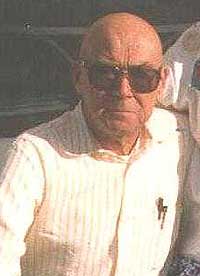
The man who conceived of Project OSCAR, Don Stoner, W6TNS, of Clearwater, Florida died May 4. He was 67. Stoner reportedly had been in ill health for some time. He reportedly suffered a ruptured aneurysm.
In 1960, Stoner, then living in Alta Loma, California, was the idea man behind Project OSCAR. Stoner outlined his concepts for an Amateur Radio space program in the February 1961 issue of QST (see "Project OSCAR--Something of the Future"). In his prophetic article, Stoner envisioned a two-phase project, the first to launch an orbiting VHF beacon transmitter into space, the second to launch an "orbital repeater." OSCAR 1 was launched December 12, 1961.
More recently, Stoner had become a guru for amateurs battling restrictive covenants to install antennas.
A Flint, Michigan, native, Stoner developed an early interest in electronics, according to longtime friend Merle Parten, K6DC. Stoner's father, Lew, was W8IMS. Don Stoner went on to enjoy financial success in the commercial world. In the Citizens Band heyday, he was a manufacturer of CB transceivers. Later, he founded a company that developed systems to back up bank records and to telephone overdue accounts. He retired in 1989.
An ARRL member, Stoner also will be remembered as a CQ columnist--he served in several editorial capacities, including VHF editor, Novice editor, surplus columnist and semiconductor columnist--and as founder of the unsuccessful National Amateur Radio Association. Stoner also wrote the "In Theory" column in CQ VHF magazine in 1996 and 1997.
Stoner's wife, Lucy, and two sons are among his survivors. Services were May 7 in Clearwater, Florida. A memorial service and interment were set for May 11 in Kirkland, Washington.
RADIO AMATEURS OF CANADA PRESIDENT, SECRETARY RESIGN
The president and the secretary of Radio Amateurs of Canada have resigned their positions, but RAC says there's no connection between the two departures. Patrick Doherty, VE3PD, became president of RAC on January 1, succeeding long-time President J. Farrell "Hoppy" Hopwood, VE7RD. First Vice President Doug Leach, VE3XK, will serve as acting president until a new top executive can be elected by the RAC Board of Directors. Like all other RAC executive officers and directors, the RAC president is an unpaid volunteer. Leach extended "sincere thanks for his contributions to RAC and best wishes for the future" to Doherty.
RAC Secretary Joe MacPherson, VE1CH (ex-VE3CAT), stepped down effective May 1. In announcing MacPherson's resignation, the RAC cited "new outside responsibilities that will require almost all of his free time." Former RAC Secretary-Treasurer Ken Pulfer, VE3PU, has agreed to serve temporarily. MacPherson has served as RAC Secretary since January 1, 1998.
No reason was given for Doherty's resignation. During his four months in office, Doherty oversaw significant changes in the Canadian Amateur Radio organization. Faced with decreasing membership and falling revenues, Doherty drastically cut RAC expenses to balance the 1999 budget. Among other moves, RAC cut the annual number of issues of its magazine, The Canadian Amateur, from 11 to six and cut and realigned headquarters staff. Doherty also reorganized the RAC management team.
RAC now reports that, following a significant loss in 1998, "the financial situation is turning around" and RAC membership now is growing again. There are approximately 45,000 amateurs in Canada.--RAC
LIMARC SAYS LETTERMAN SHOW "A BUST" FOR HAM RADIO
The hopes of a Long Island, New York, club to use their attendance on "The Late Show with David Letterman" to get some national exposure for ham radio were "a bust." That's how Long Island Mobile Amateur Radio Club Secretary Diane Ortiz, K2DO, described the group's experience May 3.
"We had a group reservation, but the pages and assistants at the show didn't let us sit together, so we were scattered throughout the theater in small groups," she said. "The audience was treated like cattle--herded from building to building and line to line."
She said the audience was instructed that if anyone "so much as held up a piece of paper" they would be immediately ejected. "So much for our 30 seconds of fame!" she lamented.
Despite their disappointment, the group still had an enjoyable time experiencing what happens in the production of a popular TV program. "We took some great pictures in front of the Ed Sullivan Theater of our group holding the LIMARC club banner before (happy) and after (sad) the show," she said.
About 20 LIMARC members made the trip into Manhattan for the Letterman show. "Many members of the audience on line with us got educated about ham radio from our presence there," Ortiz said. "They were jealous of our ability to talk to each other and keep track of what was going on!"
In sum, Ortiz called it "a pleasant social excursion and a learning experience. We got some great publicity for LIMARC and ham radio and we certainly have learned what questions to ask the next time we get invited to be part of a TV show audience."
N1GNV JOINS ARRL HQ STAFF AS ADVERTISING MANAGER
 |
John "John Bee" Bartscherer, N1GNV, has joined the ARRL HQ staff as the League's new advertising manager. He comes to the ARRL after a 30-year career in the bicycle business. For 15 years, he ran a bicycle store in Meriden, Connecticut. Most recently, he was national sales manager for a major bicycle company.
"The bicycle business is very similar, in many ways, to Amateur Radio," he said. "Learning to ride a bicycle is something most people can do if they want to, just like getting a ham ticket. From there, it's a matter of how seriously one wants to get involved."
A ham for 10 years, Bee says he's constantly amazed at the variety inherent in Amateur Radio. "A friend of mine is fond of pointing out that there are 26 different kinds of ham radio," he said. His own choice is fox hunting. "I'm amazed at what you can do with an H-T $10 worth of stuff from the hardware store." For one fox hunt, he said, he put together a "fox" consisting of a "credit card" H-T and parts from a voice recorder scavenged from his son's discarded toys. He disguised his "fox" inside a cyclist's water bottle.
The League's new advertising manager sees a bright future for Amateur Radio, especially in the waxing solar cycle and greater public awareness of the hobby and the services it provides. "Ham radio is magic, pure and simple," he says. "To communicate with someone on the other side of the world--often with no more power than a common flashlight, with antennas and equipment that I built myself, out of a handful of parts from here and there--what else could all of that be but magic?"
Bee succeeds former Advertising Manager Brad Thomas, KC1EX.
SOLAR UPDATE
Solar sage Tad Cook, K7VVV, Seattle, Washington, reports: Solar flux was up this week, averaging 27 points higher than the week before. Sunspot number averages grew from 74 to 106.6. Predicted solar flux for this weekend is 145, 145 and 140 for May 7-9, with planetary A indices of 15, 12 and 10 for the same days. Beyond the weekend, unless new sunspots come into view, solar flux will probably drift back to below 130 after May 10, then below 120 after the middle of the month. Look for return of geomagnetic storms around May 25 through 28.
Sunspot numbers for April 29 through May 5 were 98, 80, 92, 136, 95, 100, and 145, with a mean of 106.6. The 10.7-cm flux was 122.1, 123.5, 105.4, 135.7, 127.1, 138.7, and 140.9, with a mean of 127.6. The estimated planetary A indices were 19, 21, 19, 13, 9, 6 and 7, with a mean of 13.4.
IN BRIEF:
- This weekend on the radio: The Box Elder County Utah QSO Party, the CQ-M International DX Contest, the Fists CW Club Spring Sprint, and the Indiana, Nevada, and Oregon QSO parties are the weekend of May 8-9.
Just ahead: The EU Spring Sprint is May 15. The Major Six Club Contest and the Texas QSO Party are the weekend of May 21-23. See May QST, page 89, for details. - Vanity update: The FCC in Gettysburg reports it has processed vanity call sign applications received through April 16. On May 5, the FCC issued 186 grants. Another 173 applications landed in the work-in-process (WIPs) stack. --FCC
- Amateur Radio-carrying rocket launch set: The third annual Delaware Rockets For Schools program will launch a suborbital rocket Saturday, May 8, 1900 UTC (3 PM local) at Cape Henlopen State Park, Delaware. The rocket will carry three payloads designed and constructed by computer/electronics technology students at Delaware Tech-Terry Campus. The Super Loki payload consists of a GPS/MIM sending a GGA sentence to a 0.5 W transmitter on 145.79 MHz (± 5 kHz). Telemetry data will be sent as well. The Loki is expected to reach at least 50 km. It will be launched in an easterly direction over Delaware Bay. Descent time is 30-50 minutes. For more information, visit the Delaware Rockets For Schools Payload page, http://www.dtel.terry.dtcc.edu/~rocket. --Sam Guccione, K3BY
- QRN vs QRNN? A member recently asked about the distinction between QRN and QRNN. A search of our QST database via the ARRLWeb Members Only page revealed the source of this made-up Q-signal. It appeared as a Stray in the August 1931 issue of QST: "W6KX suggests a new abbreviation, QRNN, meaning man-made static, power leaks, etc. The difference between QRNN and plain QRN is that the former may let up in a short time, while the latter, when bad, usually lasts for some hours." Our Spring 1931 edition of the Callbook revealed that W6KX, since reissued, was held in 1931 by Keith LaBar of Hollywood, California. The term reportedly has limited currency today on the amateur bands and in SWL circles.
- April QST Cover Plaque Award: Sam Ulbing, N4UAU, has won the April QST Cover Plaque Award for his article, "Surface Mount Technology." Congratulations, Sam!
- Texas club celebrates 75 years: The San Angelo Amateur Radio Club this year celebrates its 75th anniversary as an Amateur Radio Club. Established in June 1924, it became an ARRL affiliated Club in 1954 and a Special Services Club in 1989. For more information, visit the club's Web site, http://www.qsl.net/saarc/. --Charlie Royall, WB5T
- SATERN station seeks equipment: The Salvation Army Team Emergency Radio Net (SATERN) station at the Richmond Salvation Army Church in El Sobrante, California, is attempting to set up a radio station to assist with emergencies in the California/Nevada area. The group seeks donations of amateur gear for both VHF/UHF, including 6 and 2 meters, and 70 cm, and for HF. For more information, contact Robert H. Garfat, KF6LGE, 4675 Appian Way #120, El Sobrante, California 94803-1851; 510 243 1181; 510 262 0582; kf6lge@aol.com. The fair value of equipment donations is tax-deductible.
- New VHF category added: The ARRL Awards Committee has voted to accept a Contest Advisory Committee recommendation for the addition of a Single Operator Low Power entry category for VHF contests, beginning with the January 2000 VHF Sweepstakes. The maximum power limits for the new Single Operator Low Power category will be: 50 MHz and 144 MHz, 200 W PEP maximum; 222 MHz and 432 MHz, 100 W PEP maximum; 902 MHz and above, 10 W PEP maximum. To qualify under the new category, a station must operate within the maximum power limitations on each band in which they participate. Certificates and awards will be developed for the new category according to the current awards structure. This rule will not affect the current Single Op QRP Portable category. The goal of the new category is to encourage greater participation among the large number of VHF/UHF contest enthusiasts, many of whom can be competitive at lower power levels. For more information, contact ARRL Contest Branch Manager Dan Henderson, N1ND, n1nd@arrl.org.