Address Changes: Kathy Capodicasa, N1GZO, e-mail kcapodicasa@arrl.org.
Editorial: Rick Lindquist, N1RL, e-mail elindquist@arrl.org.
| IN THIS EDITION: |
- League opposes vanity license fee hike
- Hams scale back flood effort
- BS7H, Scarborough Reef, is on the air!
- Apple takes exception to League's 5-GHz position
- "Rockoon" launch rescheduled for May 3
- Wisconsin hams asked to prepare for blackouts
- Wounded ham-cop expresses gratitude for QSLs
- Sister Alverna retires
- IARU and PATU to work more closely
- Solar Update
- Everett M. Renfroe, W9HG, SK
- William H. Wiand, N3WW, SK
- In Brief: This weekend on the radio; Correction; Kenwood Service still in business; More changes to WM7D call sign database; KD4WUJ a repeat winner; Update -- RS-16 70-cm spurious signals; MIT reunion set
| FCC PROPOSES, ARRL OPPOSES VANITY LICENSE FEE HIKE |
Last month, the FCC proposed effectively raising the fee for a vanity call sign from $30 to $50 for the 10-year license term. Now, the ARRL has asked the Commission to postpone the higher fee until after all four vanity call sign gates have been opened. In comments filed April 23, the ARRL told the FCC that it does not object to the fee increase per se but said that it wants all hams to have an opportunity to request a specific call sign under the current fee schedule.
The fee increase was among those included for all FCC-regulated services -- including broadcasters and commercial satellite services -- in the NPRM in MD Docket No. 96-186. Under the proposal, the FCC "rounded up" all FCC-imposed $3 annual fees to $5 per year -- the lowest fee in the new schedule. The ARRL noted in its comments to the Commission that because projected revenue from the vanity fee increase "significantly exceeds" the revenue needed to cover the costs of administering the program, a delay would be reasonable. The ARRL also asked the FCC to limit the vanity call sign fee to the minimum it needs to recoup its costs to administer the vanity program but "without rounding to a significantly higher fee." The FCC adjusts its fee schedule every year.
| HAMS SCALING BACK FLOOD RELIEF OPERATIONS |
As flood waters along the Red River continue to recede in Minnesota and North Dakota, hams in the flood-stricken area are taking a breather. Some hams are taking advantage of the lull in the action (and a reported overabundance of willing ham radio volunteers) to be with their families and to check on their own flood-damaged homes and property, although roads in and out of a few areas remain impassable.
Reports from the Grand Forks, North Dakota-East Grand Forks, Minnesota area this week said the Salvation Army ham radio operation at Grand Forks Air Force Base had been shut down and moved to a Kmart parking lot in Grand Forks. Even as the need for emergency communication abated along with the flood waters, operators from other areas have continued to arrive in the area or to volunteer their services if needed. North Dakota Section Manager Bill Kurtti, WC0M, reports the Salvation Army is making heavy use of HF and 2 meters for its communication needs -- especially at its canteens and relief stations. But the need for additional emergency and backup communication has subsided as telephone service has been restored in many areas.
Harold McConnell, WA0YSF, of Cavalier, North Dakota, says "the worst seems to be over." McConnell reports that he and Don Thomson, KB0YKD, also of Cavalier, were taking turns working in the emergency operations center in the city of Pembina, where floodwaters crested just below dikes. "We have been told to cease 24-hour operation by the Pembina County EOC and have scaled back to an 8 AM to 8 PM operation now," he said in a report to Kurtti. "That should help give people a rest as we are getting a bit stressed out."
According to Minnesota Section Manager Randy Wendel, N0FKU, the impact of the devastation has not been lost on the hams who've been volunteering in the flooded areas. Wendel said he'd heard a ham on a North Dakota HF net talk about his two days of helping out in the flood zone. "The one thing that stuck in his mind was seeing people crying and wiping tears while trying to eat their meals provided to them while in the shelters," Wendel said.
| BS7H, SCARBOROUGH REEF, IS ON THE AIR! |
The 1997 DXpedition to Scarborough Reef, BS7H, hit the airwaves at approximately 0445 UTC on April 30! Scarborough Reef is a territory of the People's Republic of China, where it's known as Huang Yan Dao. The reef consists mostly of rocks poking out of the Pacific, only a few of which are large enough to support (just barely) a compact ham radio station and antenna. Propagation and weather have been reported good. The BS7H team continues to put QSOs in the log at a rapid clip. Most areas of the world have reported strong signals, while propagation to central and eastern North America has suffered from a moderate increase in geomagnetic activity.
Operating frequencies: CW -- 1826.5, 3505, 7005, 10105, 14024, 18073, 21024, 24895, 28024 and 50110 kHz; SSB -- 1826.5, 3790 (3750 secondary), 7065, 14195, 18115, 21295, 24935, 28485 and 50110 kHz; RTTY -- 14083 and 21083 kHz. BS7H will also be QRV on the Russian RS satellites.
The BS7H team has three HF stations simultaneously on the air now. The six-meter beacon is off the air due to a technical problem which they hope to have resolved soon. The team reports it has logged a total of approximately 7000 QSOs as of early today (May 2).
Tim Totten, N4GN, is keeping the rest of the world up-to-date via the Internet. He says that, unlike the VK0IR DXpedition earlier this year, there will be no on-line Internet log search capability for the BS7H 1997 operation. The team is using paper logs, and there is no acceptable method of transmitting log data from the reef. Also, there is no e-mail reflector for the BS7H operation. Bulletins are posted to the DX reflector and to the BS7H 1997 home page (http://www.iglou.com/n4gn/sr/)
Martti Laine, OH2BH, who helped organize the previous DXpeditions to the reef, had this to say: "Judging the size of the pileup, Old Timers and QRPers alike have fully accepted this small piece of land to be their target QSO for this week. DX is alive and well this week!"
The BS7H operation continues through May 6, 1997. JA stations QSL via JA1BK. All others QSL via W4FRU. For additional information, visit the BS7H 1997 home page, http://www.iglou.com/n4gn/sr/, or contact Tim Totten, N4GN, e-mail n4gn@iglou.com; fax 502-239-7766. -- BS7H 1997 home page
| APPLE TAKES EXCEPTION TO LEAGUE'S 5-GHz STAND |
Apple Computer has taken exception to objections by the ARRL opposing Apple's efforts to deploy so-called Unlicensed National Information Infrastructure (U-NII) devices in the 5-GHz range. Earlier this year, the FCC made available 5.15 to 5.35 and 5.725 to 5.825 GHz to U-NII devices under Part 15 of its rules. The spectrum involved includes part of a secondary Amateur Radio allocation. The ARRL has filed comments opposing Apple's requests insofar as they would increase the potential for interference to amateur operations. Part 15 requires that unlicensed operations not interfere with other services. The U-NII devices would provide short-range, high-speed wireless digital communication.
The comments were filed in ET Docket 96-102. Three petitions for reconsideration were filed by various industry groups, but Apple's was the only one that concerned the amateur allocation. Apple said the League's objections "reflect the League's general opposition to any shared use of Amateur Radio Service frequencies, rather than the presence of any real threat to Amateur Service operations posed by Apple's proposal." Apple said the ARRL failed to show that non-spread spectrum U-NII transmitters using highly directional antennas pose any greater interference threat to hams than do spread spectrum transmitters using highly directional antennas.
At its April 3 meeting, the FCC relaxed the restrictions on the use of directional antennas in conjunction with spread-spectrum devices. Apple would like the FCC to treat U-NII directional antennas the same way.
| "ROCKOON" LAUNCH SET FOR MAY 3 |
A group of space enthusiasts that includes several hams set May 3 for its second attempt to launch a rocket bearing ATV and APRS systems from the coast of North Carolina. Liftoff is set for 0615 Eastern Daylight Time. The original launch attempt on March 22 by the Huntsville Alabama L5 Society (HAL5) -- a chapter of the National Space Society -- ran into technical problems (see The ARRL Letter Vol 16, No 12 and Vol 16, No 13). According to Bill Brown, WB8ELK, the group's "balloonmeister," the high-altitude lift-off (HALO) project will use a rocket launched from a high-altitude balloon -- a rockoon. The approach allows the small rocket to obtain a fairly high altitude before launched. This reduces the amount of air that can limit acceleration during the launch. The command to launch will be sent when the balloon is safely over open ocean and the rocket pointed away from land. The group has chosen a new balloon launch site -- Hamstead, North Carolina, which is about 20 miles northeast of the city of Wilmington. The rocket launch will come some two hours following the balloon launch, when the balloon is more than 100,000 feet above the Earth.
The rocket will carry a 1280-MHz FM ATV system (3 W into a monopole antenna) and an FM packet radio with APRS formatted GPS data on 441.050 MHz. The call sign will be KE4ROC. The group expects the transmitter range to cover 700 miles at its apogee (maximum altitude) -- expected to be some 400,000 feet or about 75 miles -- which would include the East Coast, the Southeastern US and part of the Midwest. The balloon launch vehicle will carry an AM ATV transmitter (on 434.00 MHz) which will provide a live, color view of the rocket launch. The system will use a horizontally polarized antenna, and the call sign will be WB8ELK. Coverage from the gondola system should be approximately 400 miles at the rocket launch altitude, which would include the Southeastern US and parts of New Jersey and Pennsylvania, Brown estimates.
HF coordination nets will meet on 3871 and 7155 kHz. W4HTB and WA3USG will be the respective net control stations.
The rocket will parachute down for a water landing and a rendezvous with a recovery boat about 80 miles east of Wilmington, NC. Launch rain dates are May 4 or May 12. For more information, check out the group's home page at http://fly.hiwaay.net/~bbrown/ or e-mail bbrown@hiwaay.net. --Bill Brown, WB8ELK
| WISCONSIN HAMS ASKED TO PREPARE FOR POWER BLACKOUTS |
Hams groups in Wisconsin have been asked to prepare to help out in the event of possible power outages this spring and summer -- some of which may be unannounced -- because a significant portion of the region's power-generating capacity is out of commission. The Wisconsin Public Service Commission briefed state agencies in late April on the possibility of power blackouts -- including local outages and "rolling blackouts" that could adversely affect telephone service as well as police and other public safety agencies. The Wisconsin Reliability Assessment Group -- a cooperative of the region's electric utilities -- says that about one-third of the region's nuclear-powered generating capacity is "temporarily or permanently out of service." This includes several nuclear units in Illinois, a source of backup power for Wisconsin. The nuclear plants are scheduled to be back on line this summer. In addition, 12 of the state's fossil-fuel plants were scheduled to be down for maintenance during April and May. The greatest threat is from higher-than-normal power demand during hot weather -- when air conditioner usage surges -- although lightning damage from storms also could play a role, the Commission said.
Alan Wohlford, warning and communications officer, Wisconsin Emergency Management, issued the warning and asked Amateur Radio clubs and ARES and RACES groups -- but not individual hams -- to meet with local emergency management and public safety officials to coordinate any assistance that might be needed if normal communication are disrupted. In the event of power and/or telephone outages, all hams were being asked to be alert for emergency traffic, and mobile operators were being asked to placard their vehicles to identify themselves as hams who can provide emergency communication.
A statewide power outage may require the activation of the Badger Emergency Net (BEN) on 3985 kHz. For more information, contact the Wisconsin Emergency Management ham station: tel 608-242-3323; e-mail wc9aag@skywarn.cs.wisc.edu.
| WOUNDED HAM-COP EXPECTED BACK ON BEAT SOON |
Remember Dave Harvey, KE4VDP, the police officer from Lithonia, Georgia, who was shot in the line of duty last July? When Harvey began the long recuperation from his injuries, his good friend and colleague, Jim Sheppard, KT4FD, requested that hams send Harvey their QSLs to cheer him up and to wish him a speedy recovery (see "QSLs sought for ham radio cop shot in line of duty," The ARRL Letter, Vol 15, No 8.). Harvey, a Technician since 1995, had never even received a QSL before. The response was tremendous! Sheppard this week forwarded this message of gratitude from Dave Harvey, who now is expected to fully recover and return to work:
"Just a word of sincere appreciation for all of you wonderful people in the Amateur Radio community that sent me so many QSL cards and gifts. I received well over 500 cards, and the gifts were truly meaningful. I would like to say a special thanks to Mrs Maria Lowe from Baldwinsville, New York, who has been in touch continuously through cards and letters and is a very dear person.
"The doctor is very amazed at my recovery after seven operations and says that I should be able to return to my regular duties after one more minor operation. All that will be left to do will be to heal up and get the strength built back up in my arm.
"Thank you all again for your thoughts, prayers and inspiration. After hearing stories from some of you, I realize just how fortunate I really am. 73, Dave Harvey, KE4VDP"
Sheppard said he believes the cards and letters from other hams played a big part in Harvey's recovery and added that he's looking forward to having his friend back on the job.
| SISTER ALVERNA RETIRES FROM HANDI-HAM SYSTEM |
ARRL Humanitarian Award winner Sister Alverna O'Laughlin, WA0SGJ -- a mainstay of the Courage HANDI-HAM System -- retired on April 28. "Sister" (as she's known) worked at Courage Center for 16 years, serving as educational services coordinator in the HANDI-HAM Program. However, her association with the HANDI-HAM System goes back much further than that. She was one of the original member-volunteers when the late Ned Carman, W0ZSW, founded the program in 1967. Sister was first licensed in 1967 as WN0SGJ, and now holds an Advanced Class license. She received the Humanitarian Award from ARRL for her good work with persons who have severe physical disabilities and sensory impairments.
Through the 30 years that WA0SGJ has been in HANDI-HAMS, she has helped thousands of newcomers along the path to their licenses, all the while remaining a very active amateur. Sister has a special love for county hunting, and has worked all counties (she's now a "wild card" for county hunters with similar aspirations, and her call is much sought after as she works HF mobile on her auto trips across North America).
Last Spring, Sister Alverna was in a car accident while on her way to the Midwest Division Convention, and sustained serious injuries to her leg and ankle. She has spent the past year recovering, but has maintained a part-time schedule at HANDI-HAMS. Her retirement will allow her to concentrate on getting well again, and she hopes to be walking this summer!
Retirement will not keep WA0SGJ off the air! Plans are being made to install her HF and VHF rigs at her new QTH in Rochester, Minnesota, soon after she moves there from the Twin Cities. Friends and well-wishers may contact Sister at wa0sgj@juno.com. There's a picture of Sister on the Courage HANDI-HAM home page, http://www.mtn.org/handiham/. --Patrick Tice, WA0TDA, Manager, Courage HANDI-HAM System
| IARU AND PATU TO WORK MORE CLOSELY |
The International Amateur Radio Union (IARU) Region One and the Pan African Telecommunications Union (PATU) have signed a memorandum of understanding which will lead to a closer relationship and cooperation in the development of telecommunications expertise and the Amateur Radio service on the African continent. The PATU was established in 1977 by the Organization of African Unity (OAU) plenipotentiaries as a specialized telecommunications agency. Its broad objectives include fostering and maintaining cooperation among member states to improve, expand, develop and use the telecommunication networks and services and to promote the establishment of multinational training institutes in Africa.
The memorandum of understanding provides for regular exchange of information and documentation to enhance the development of ham radio in Africa, at the same time supporting PATU's training and development objectives. Commenting on the memorandum of understanding, IARU Region One Chairman Lou van de Nadort, PA0LOU, said the agreement is a direct outcome of the African Development Program, which is aimed at expanding ham radio in Africa and establishing the Amateur Radio service as a national resource that deserves governmental support at meetings of the International Telecommunication Union and other telecommunication organizations. --IARU Region 1
| SOLAR ACTIVITY INCREASES |
Sun watcher Tad Cook, KT7H, Seattle, Washington, reports: Solar activity was up a tiny bit last week, but the daily solar flux was still below the previous 90 day average of 74 on each day. Solar flux peaked slightly at 73.1 on April 27.
April 26-29 had very quiet geomagnetic indices, with an A index of 4 each day and many periods with a K index of zero, the best there is for HF conditions.
The projection for the rest of May indicates more flat conditions, but of course this is based only upon the previous solar rotation. Since there has been no significant activity over the past month, there are no known really active regions to rotate into view.
Sunspot numbers for April 24 through 30 were 13, 12, 32, 17, 17, 12 and 0, with a mean of 14.7. The 10.7-cm flux was 69.8, 68.7, 70.9, 73.1, 72.4, 71.9 and 72.6, with a mean of 71.3, and estimated planetary A indices were 15, 7, 4, 4, 4, 4, and 11, with a mean of 49.
| EVERETT M. RENFROE, W9HG, SK |
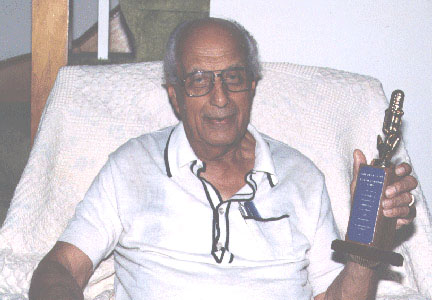 |
Ham radio veteran Everett M. Renfroe, W9HG, of Chicago, Illinois, died April 7, 1997. He was 93 and had been a licensed amateur for more than 75 years. Renfroe -- a vocational high school teacher and administrator in his working years -- was first licensed in 1921 as 9DOS. He recently was awarded a 75-year plaque by the Quarter Century Wireless Association. Renfroe also was a member of the ARRL and was the senior member of the OMIK Amateur Radio Network and recipient of that organization's special achievement award (see QST, Jan 1995, page 54). He is survived by a sister and brother and five children, including Bill Renfroe, W7IOV.
| WILLIAM H. WIAND, N3WW (ex-W3BIP), SK |
William H. Wiand, N3WW (ex-W3BIP), died April 25, 1997. He was 81. A ham for 65 years, Wiand served as Section Communications Manager for Eastern Pennsylvania from 1953 until 1955. As were most SCMs in Eastern PA during that era, he was a member of the Frankford Radio Club. In addition to being an ARRL member, Wiand was also a member of QCWA Colonial Chapter 166 and belonged to the Phil-Mont Mobile Radio Club and the Pottstown Area Repeater Team. Memorial contributions may be made to The Alzheimer's Association, 4195 15th St, Philadelphia, PA 19146. --Kay Craigie, WT3P
| In Brief: |
- This weekend on the radio: This is a busy contest weekend. Participate in the ARI International DX, Danish SSTV, MARAC County Hunters CW and Ten-Ten International Net Spring CW Contests. The Massachusetts, Texas and Connecticut QSO Parties also are scheduled.
- Correction: In The ARRL Letter, Vol 16, No 17, our report on the shuttle refly of mission STS-83 said that the International Space Station (ISS) is a joint venture of the US and Russia. The ISS project also involves Japan, Canada, and the European Space Agency(ESA). --Rick Lindquist, N1RL
- Kenwood Service still in business: Despite rumors and reports to the contrary, Kenwood Service Corporation is still very much in business on both coasts, according to Kenwood's Paul Middleton, KD6NUH. Kenwood Service Center West held an open house April 25 at its new location at 13030 Alondra Blvd -- No. 104, Cerritos, CA 90703-2257; tel 562-483-8740. The service center moved from Long Beach, California, earlier this year. Middleton said Kenwood Service Corporation is separate from Kenwood Communications Corporation, and the two service centers are "independently operated but chartered and regulated by Kenwood." Middleton, who's Kenwood's national sales manager for amateur and marine products, said the new West Coast center employs the same staff that formerly worked for Kenwood at the Long Beach location. No jobs were lost in the transition, he said. Kenwood Service Center East is at 829 Lynnhaven Pkwy -- Suite 130,Virginia Beach, VA 23452; tel 757-340-1702.
- More changes to WM7D call sign database: Mark Downing, WM7D, reports his call sign database now is available at http://www.wm7d.net/fcc/callsign.html. The database now includes Canadian call sign information from Industry Canada. WM7D recently added search capability for US amateurs by name, city, state, and/or ZIP Code. For more information, e-mail wm7d@wm7d.net. --Mark Downing, WM7D
- KD4WUJ a repeat winner: For the second year running, country music singer Patty Loveless, KD4WUJ, was named top female vocalist during the annual Academy of Country Music awards April 23. Patty also was Country Music Association's female vocalist of the year in 1996.
- Update -- RS-16 70-cm spurious signals: Spurious emissions on the 70-cm band from RS-16 have been confirmed by Pat Gowen, G3IOR, who says they show up when the 435.504-MHz beacon is active. Using stacked 13-element RHCP AZ/EL Yagis, Gowen was able to hear the spurious emissions reported earlier by Leo, UA3CR. The strongest was just S2, which Gowen estimated to be about 35 dB below the beacon. G3IOR said the spurious emissions show up as very rough, T2, auroral-like signals on 435.461, 435.478, 435.483, 435.491, 435.507, 435.516, 435.524, 435.538 and 435.544 MHz (these frequencies are approximate due to the rapid Doppler shift of the downlink signals). --SpaceNews
- MIT reunion set: The MIT Radio Society -- operators of W1MX and W1XM and one of the oldest college radio societies in the world -- celebrates with a reunion May 5, 1997 at the club station in Walker Memorial. Festivities begin at 4 PM, and all past and present members are invited. The reunion also will serve to celebrate the installation of a new Moseley Pro 96-3 antenna for W1MX. For more information, contact Dennis Shapiro, W1UF, (MIT '55), 24 Essex Rd, Chestnut Hill, MA 02167; tel/fax 617-277-6886; e-mail ldennis@highway1.com.
| The ARRL Letter |
The ARRL Letter is published by the American Radio Relay League, 225 Main St, Newington, CT 06111; tel 860-594-0200; fax 860-594-0259. Rodney J. Stafford, KB6ZV, President; David Sumner, K1ZZ, Executive Vice President.
Circulation, Kathy Capodicasa, N1GZO, e-mail kcapodicasa@arrl.org.
Editorial, Rick Lindquist, N1RL, e-mail elindquist@arrl.org.
Visit the ARRLWeb page at http://www.arrl.org.
The purpose of The ARRL Letter is to provide the essential news of interest to active, organizationally minded radio amateurs faster than it can be disseminated by our official journal, QST. We strive to be fast, accurate and readable in our reporting.
Material from The ARRL Letter may be reproduced in whole or in part, in any form, including photoreproduction and electronic databanks, provided that credit is given to The ARRL Letter and The American Radio Relay League.
| How to Get The ARRL Letter: |
The ARRL Letter is distributed directly from ARRL HQ only to elected League officials and certain ARRL appointees and to paid subscribers of the now-defunct hard-copy edition of The ARRL Letter . For members and nonmembers alike, The ARRL Letter is available free of charge from these sources:
- The ARRLWeb page (http://www.arrl.org/arrlletter/). This version of The ARRL Letter includes any photographs.
- The HIRAM BBS: 860-594-0306.
- The ARRL Technical Information Server (Info Server): Send an e-mail message to info@arrl.org. The subject line should be blank. In the message body, type send ltrmmdd.txt, where mm represents two digits for the month and dd represents two digits for the day (The ARRL Letter is published every Friday). For example, to request The ARRL Letter file for Friday, January 3, 1997, you'd type send ltr0103.txt. Then, on a separate line, type quit.
- CompuServe and America Online subscribers, as a downloadable text file in the services' ham radio libraries
- The Netcom server, run by the Boston Amateur Radio Club and Mike Ardai, N1IST: Send e-mail to listserv@netcom.com (no subject needed). The body of the message should say subscribe letter-list.